
Backyard Biology: Woodpeckers at the Feeder
Observed species:
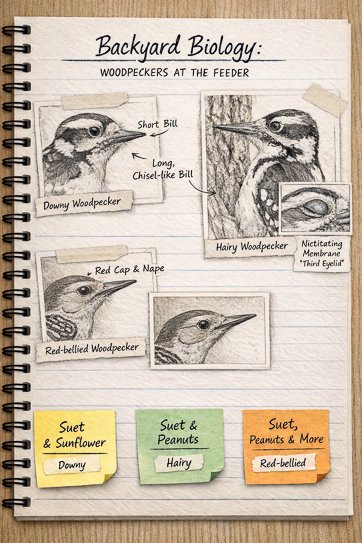
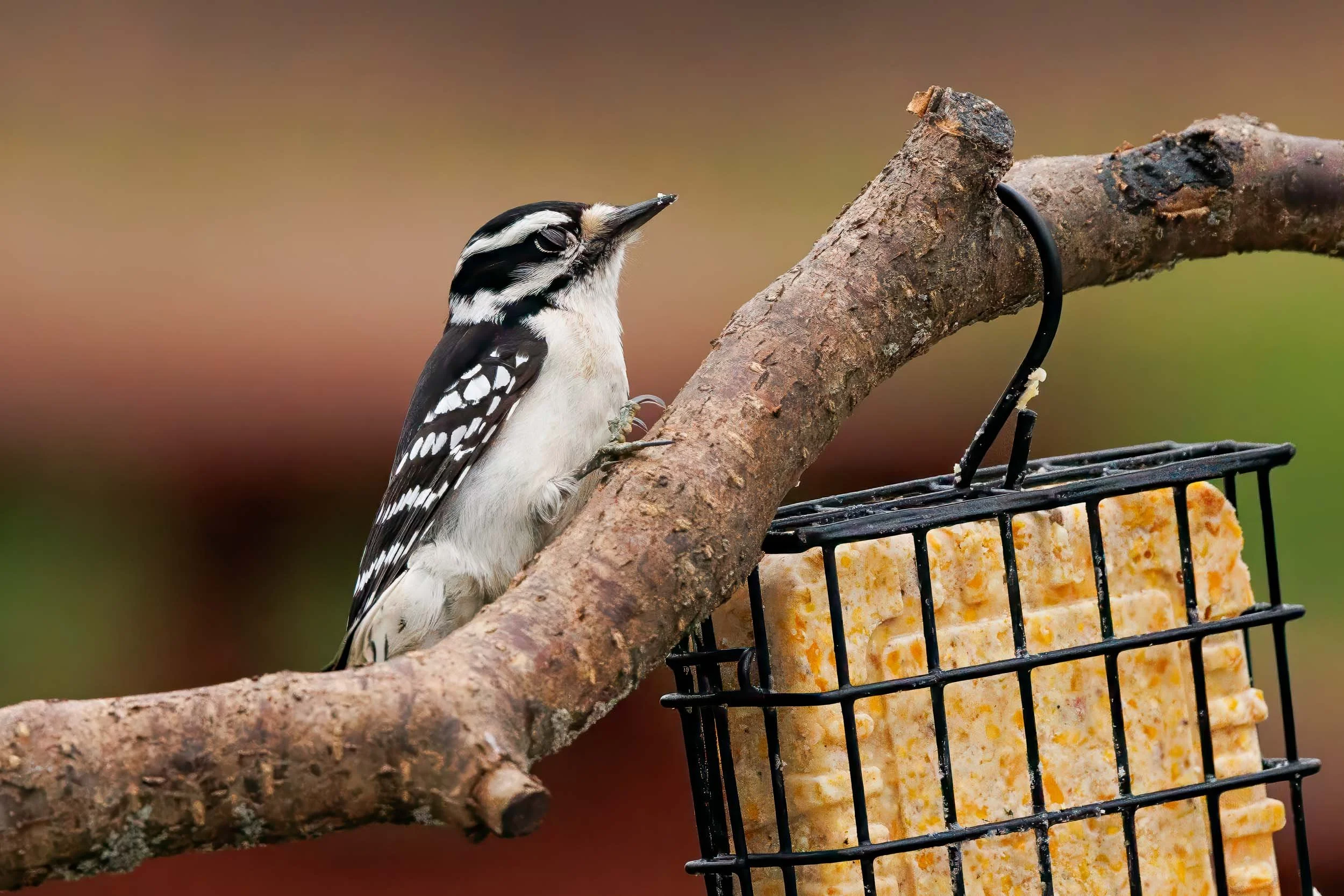
Downy Woodpecker
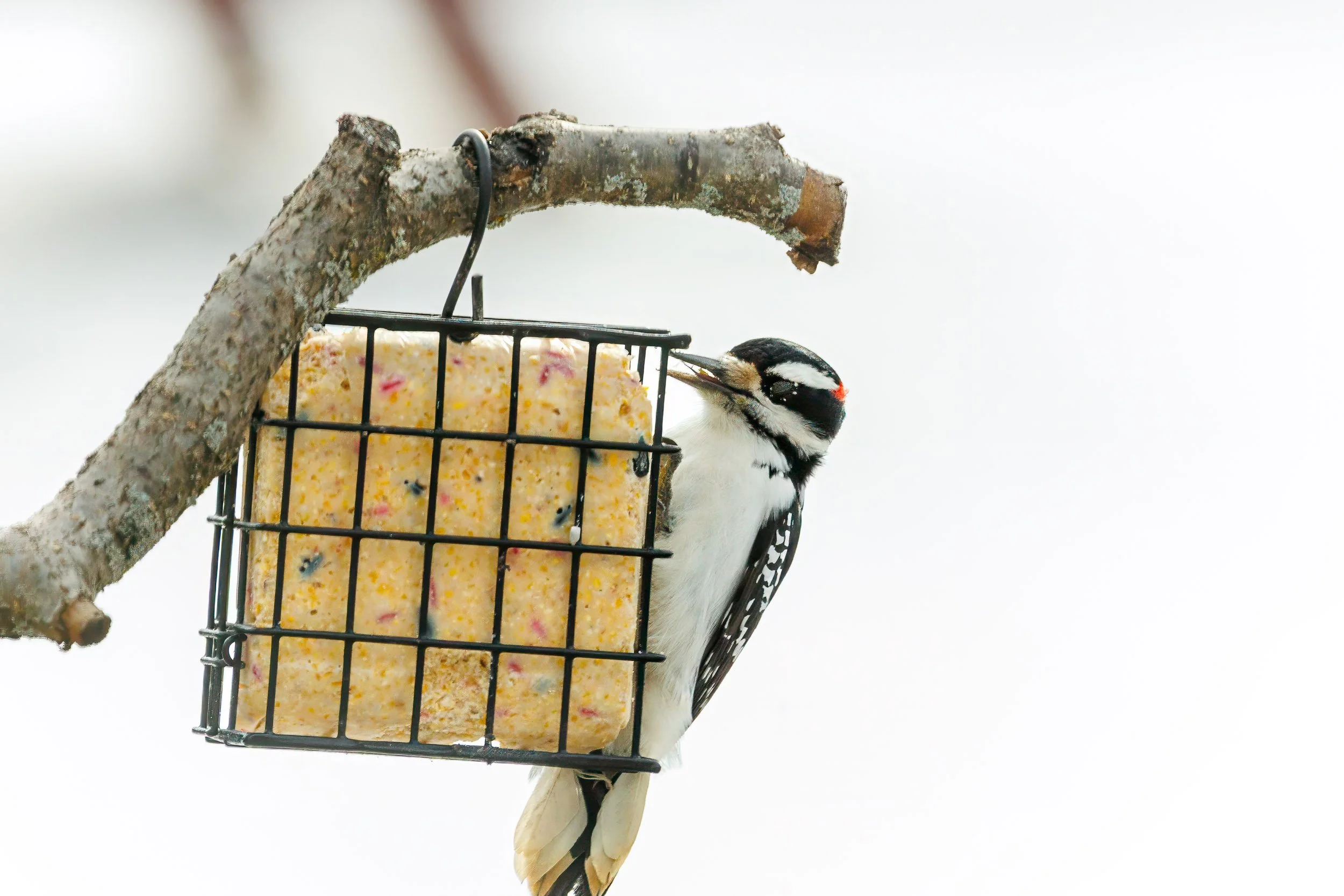
Hairy Woodpecker
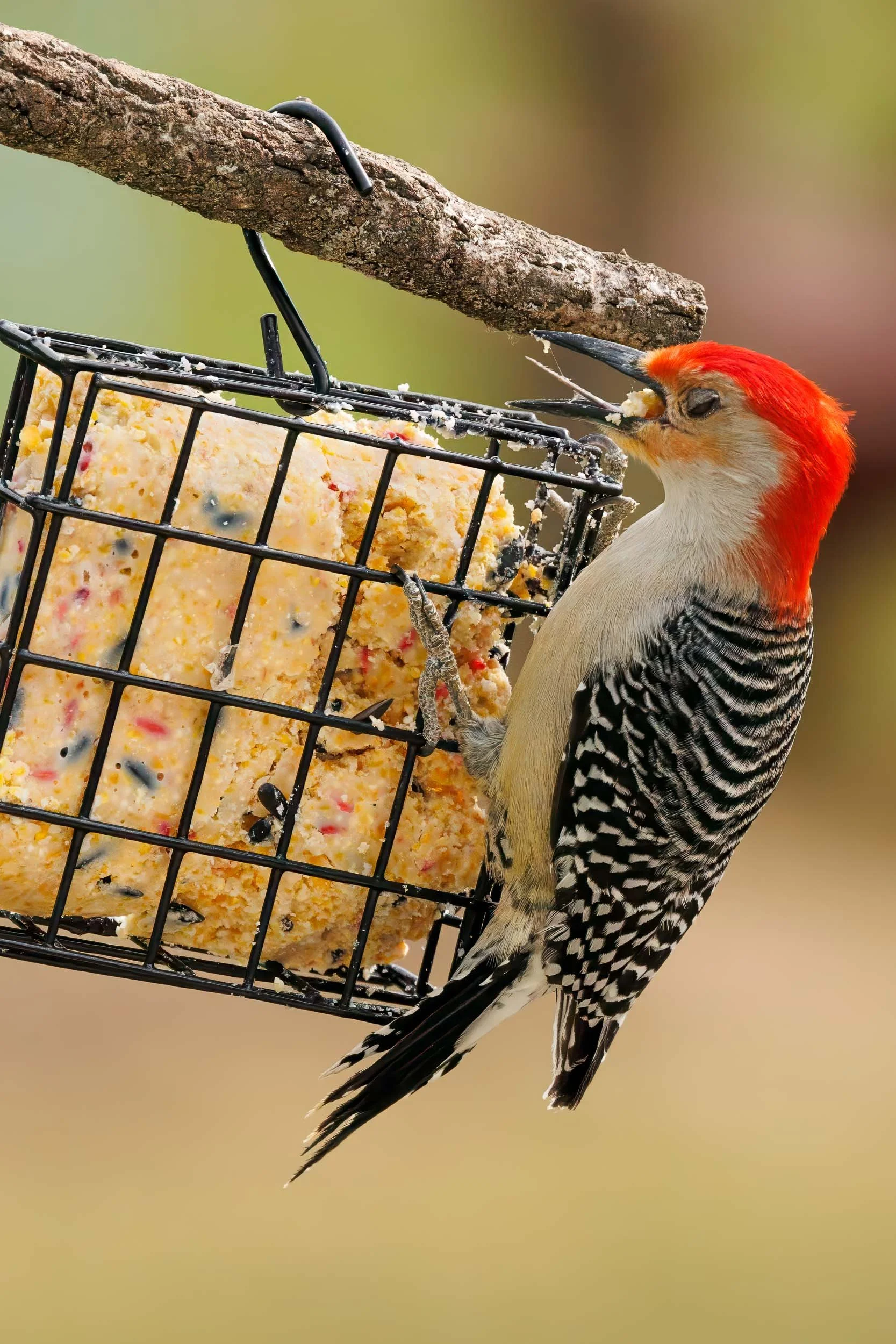
Red-bellied Woodpecker
Identification:
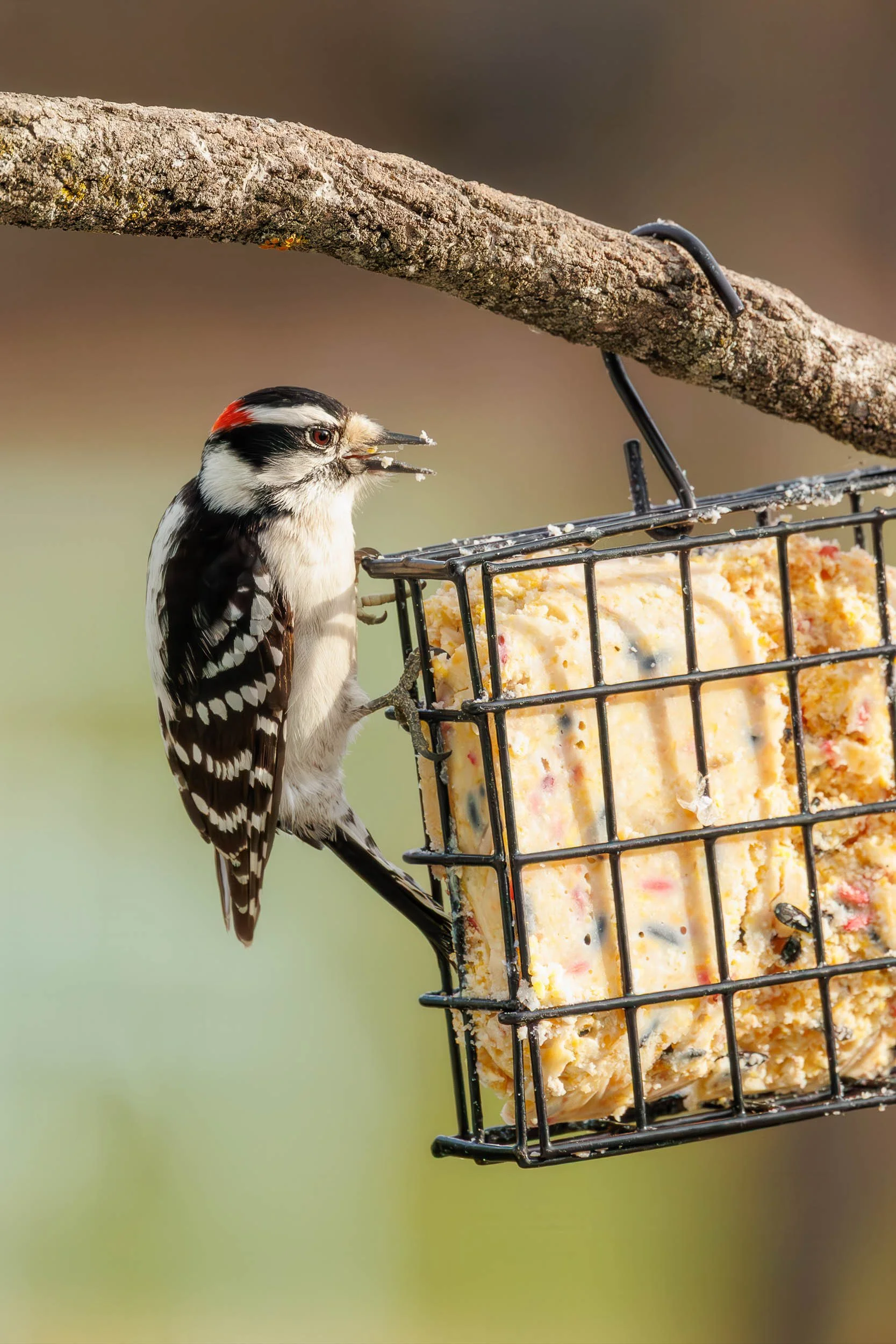
The Downy Woodpecker (Dryobates pubescens) is North America’s smallest woodpecker measuring roughly 5.5-7 inches in length. It sports a checkered black-and-white plumage and a broad white stripe down its back. These birds have a short, stubby bill, especially compared to that of the Hairy Woodpecker. Males are distinguished by a small red patch on the nape.
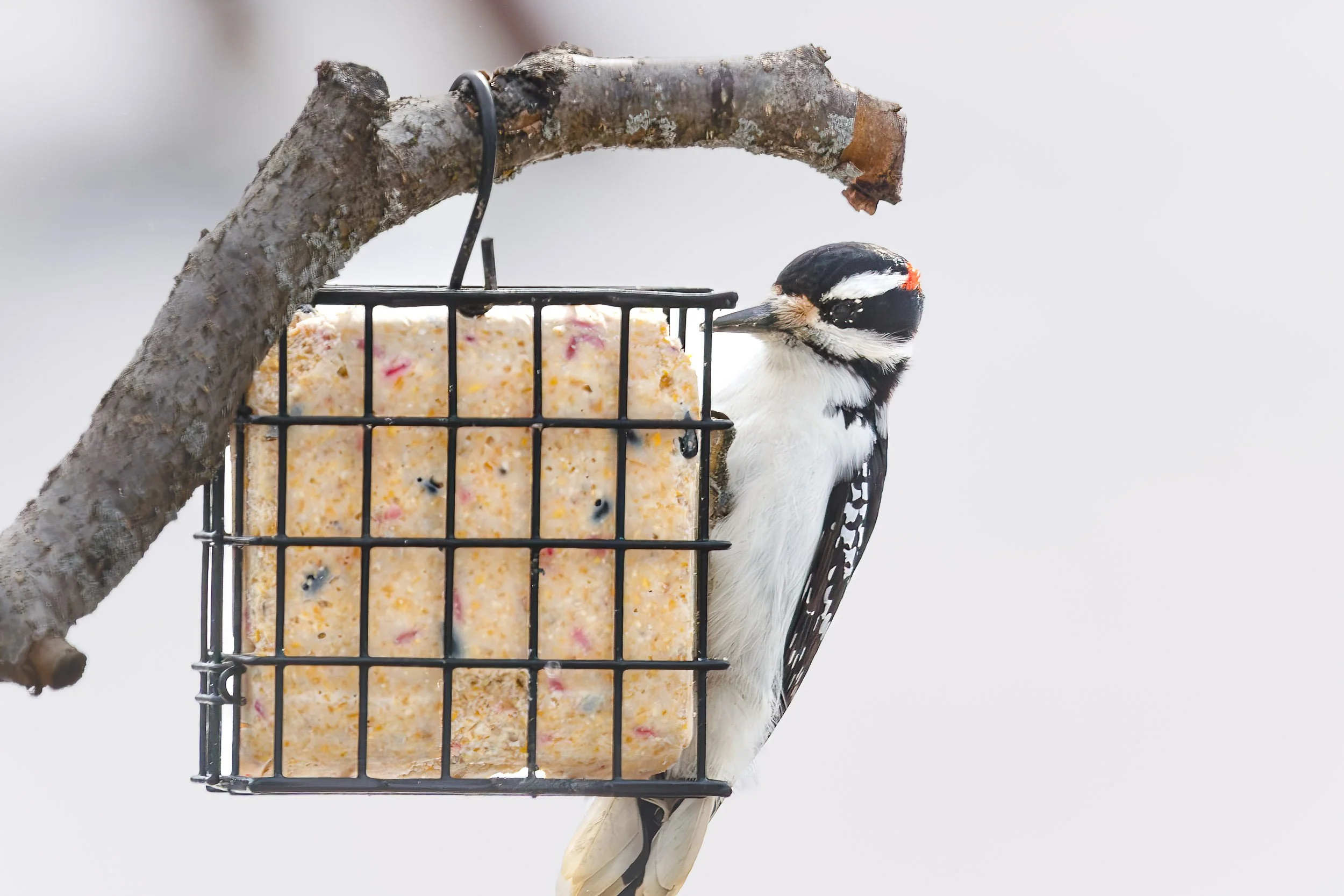
The Hairy Woodpecker (Leuconotopicus villosus), while quite similar in coloration and markings to the Downy, has a longer, chisel-like bill, almost the same length as its head. It is also a bit larger, measuring roughly 7-10 inches in length.
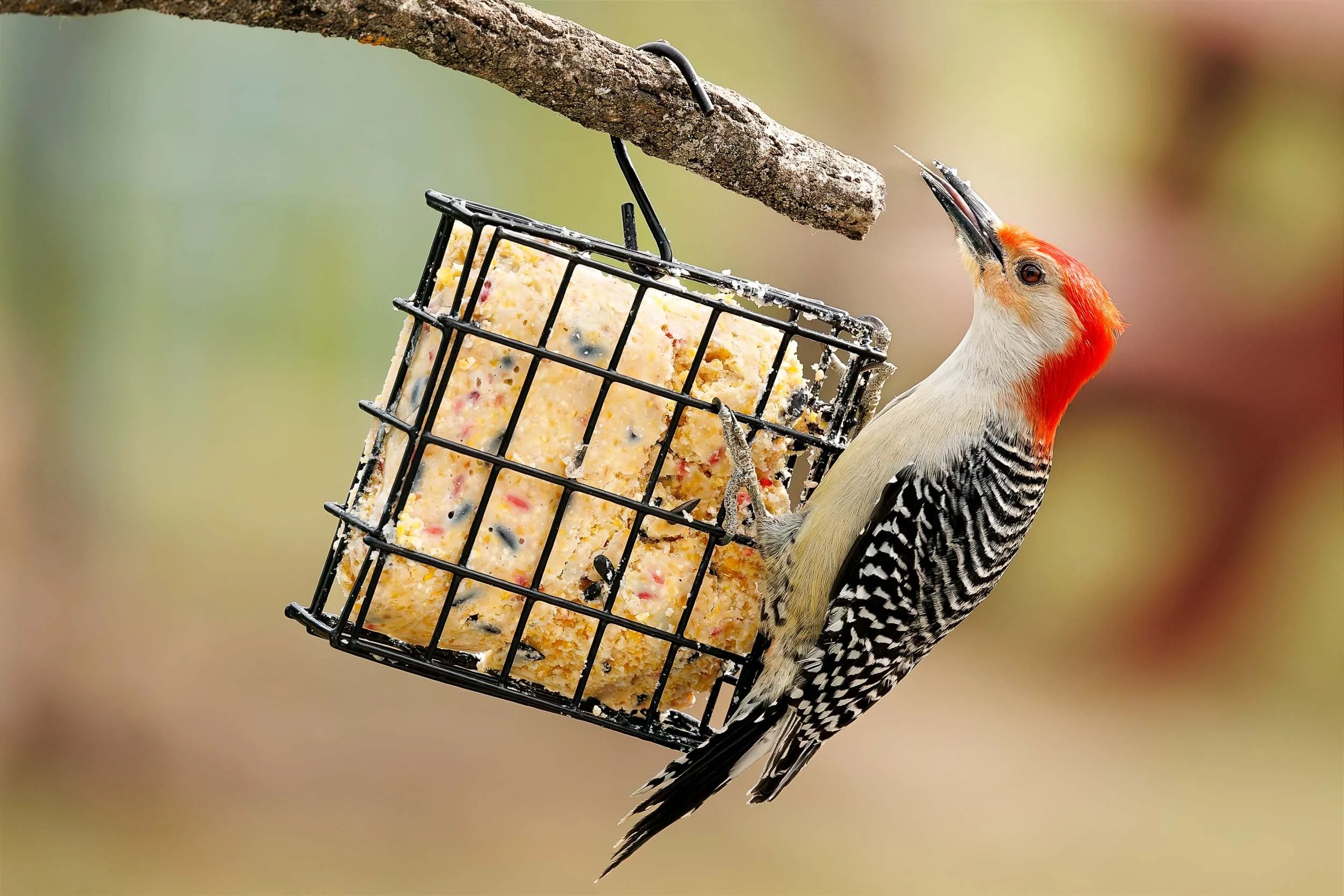
The Red-bellied Woodpecker (Melanerpes carolinus) stands apart. Its has a pale underbelly and a barred, zebra-like, black and white pattern on its back. Males have a bright red cap and nape, while females have red only on the nape. These birds are roughly 9-10.5 inches in length and have a large chisel-like bill.
The Nictitating Membrane
An interesting detail that stood out while photographing these birds is something you won’t notice without a close look: the nictitating membrane, or “third eyelid.” It sweeps across the eye during feeding and pecking, likely acting as protection from debris while still allowing some level of vision. It’s a small detail—but one that hints at just how refined these birds are for their environment.
Attracting Woodpeckers
If you’re trying to attract these birds, a simple setup goes a long way:
Downy Woodpecker: suet and black oil sunflower
Hairy Woodpecker: suet and peanuts
Red-bellied Woodpecker: suet, peanuts, sunflower, even fruit
For more information on my approach to photographing birds, check out this post:
How I Photograph Backyard Birds in Winter (Settings, Strategy & Editing Tips)