
Through the Driver’s Side Window - Classic Car Photography
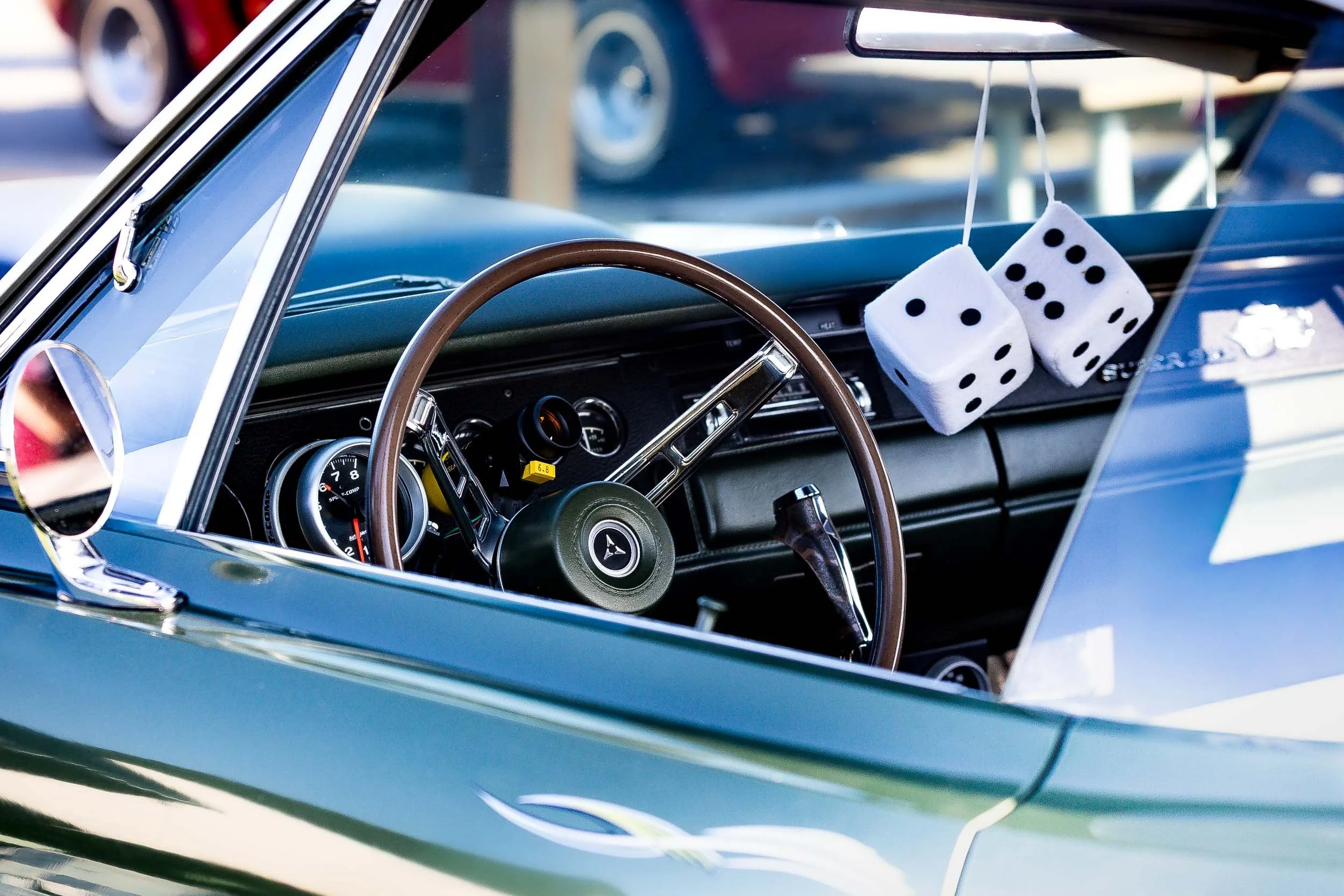
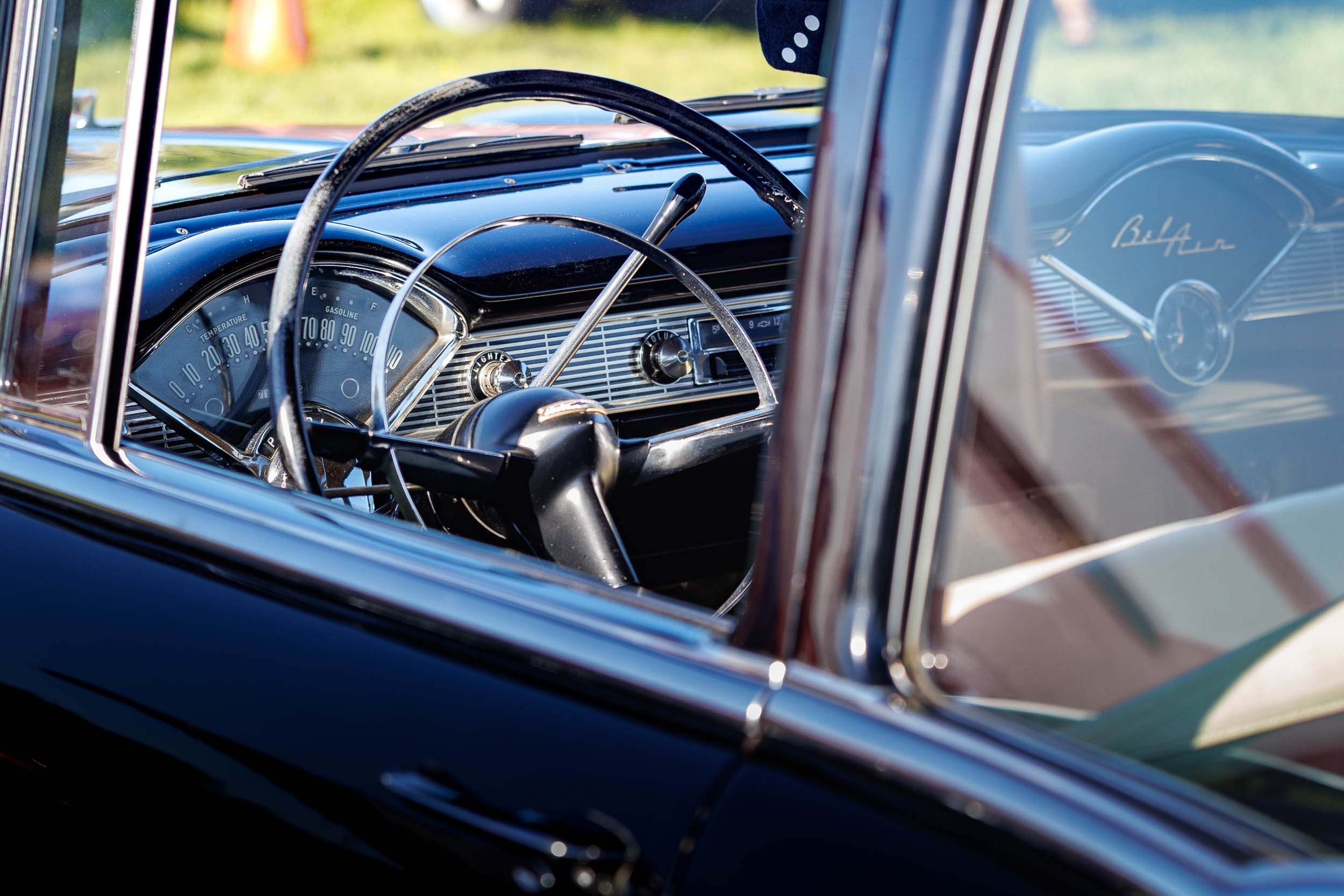
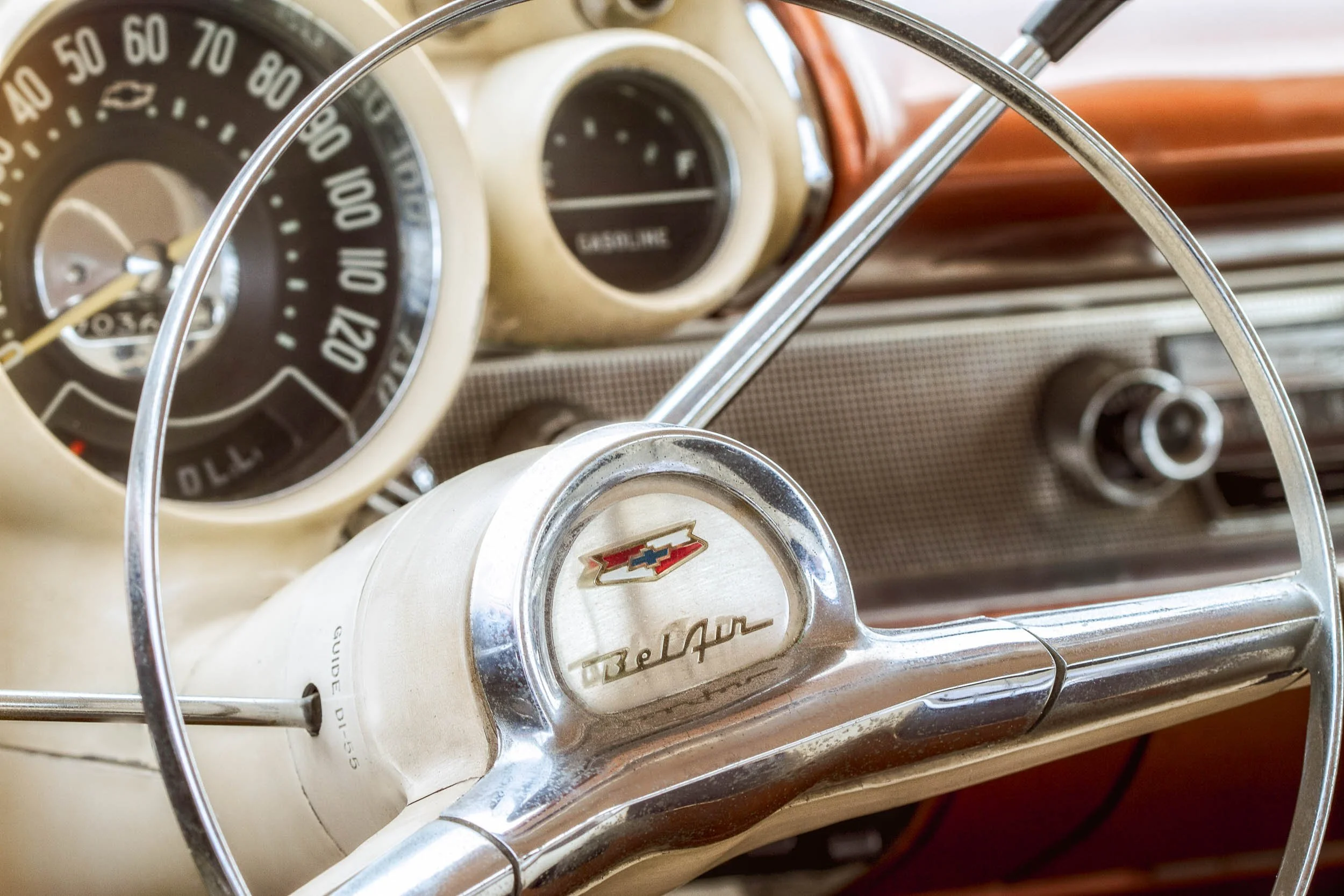
One of my favorite ways to photograph classic cars is through the driver’s side window — framing the steering wheel and front dash as if you’re about to slide into the seat and turn the key. It’s less about documentation and more about perspective.
Why the Driver’s Side Window?
Shooting through the open window creates three layers in a single frame:
The exterior body lines
The interior craftsmanship
The implied presence of the driver
This angle turns the viewer into a participant rather than a spectator. Instead of looking at the car, you’re looking into it.
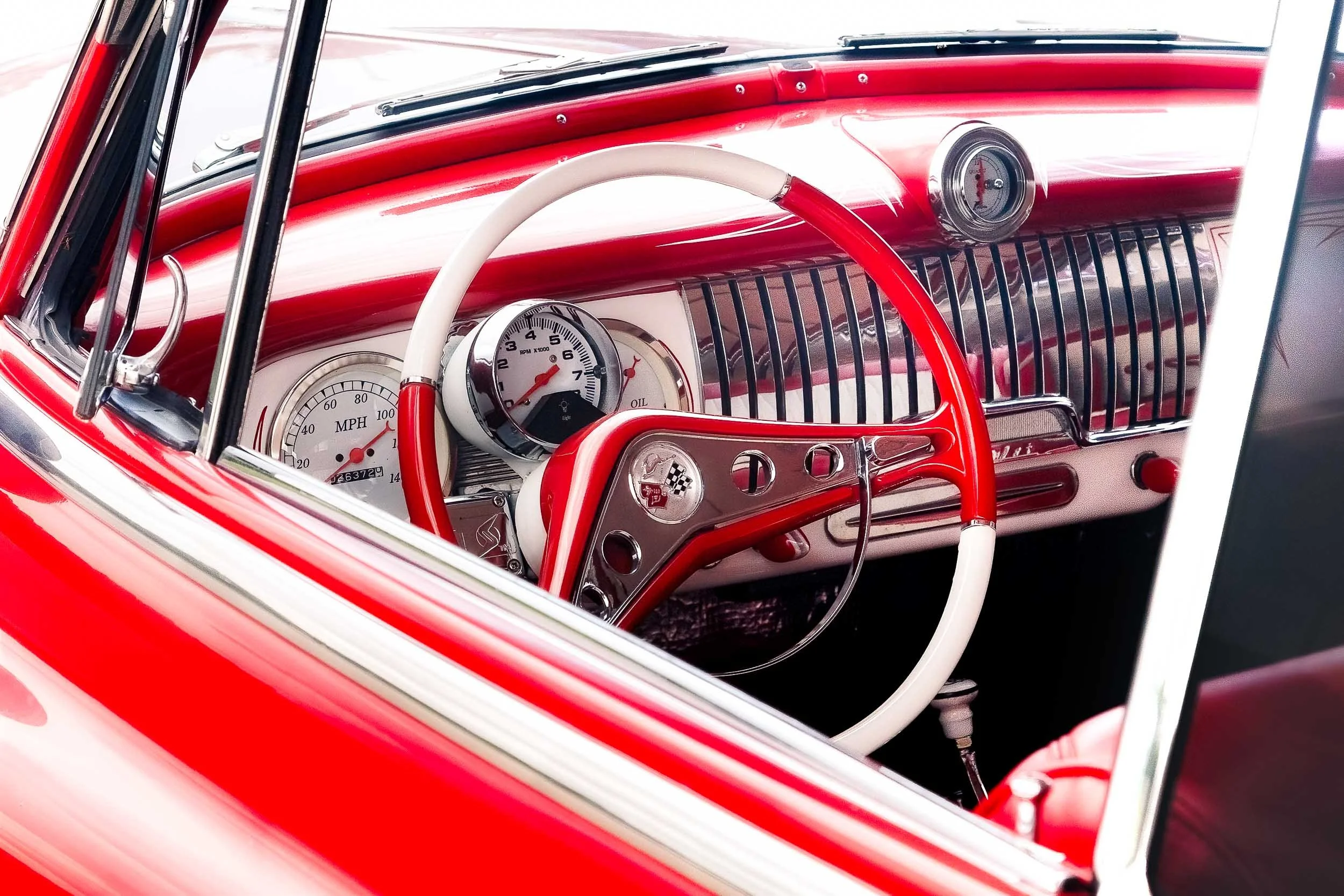
Color, smooth lines, and interior details bring this classic car image to life.
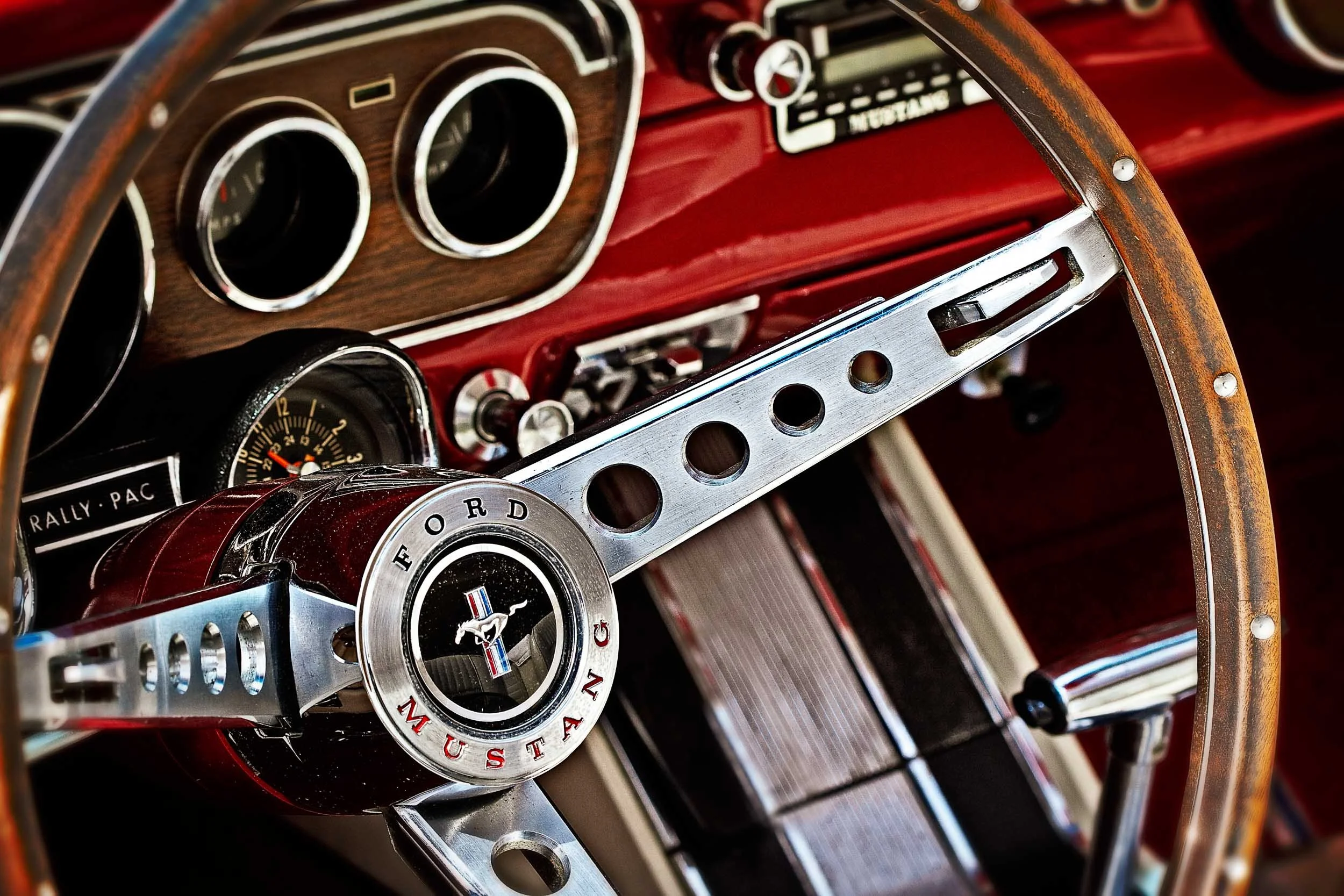
Details Tell the Story
While the window perspective creates mood, the detail complete the narrative.
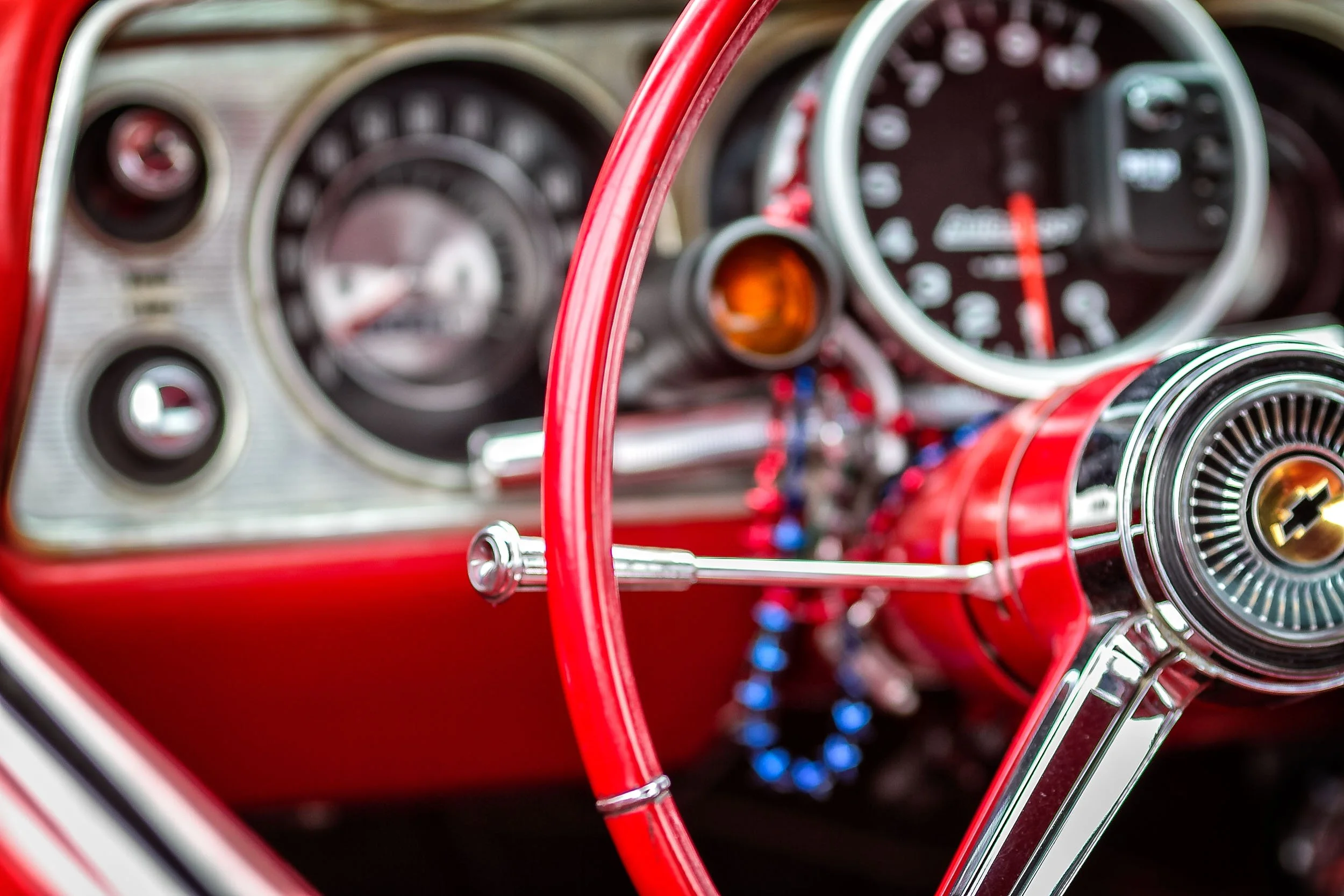
The typography of a vintage emblem.
The wear pattern on a steering wheel.
The precision of analog gauges.
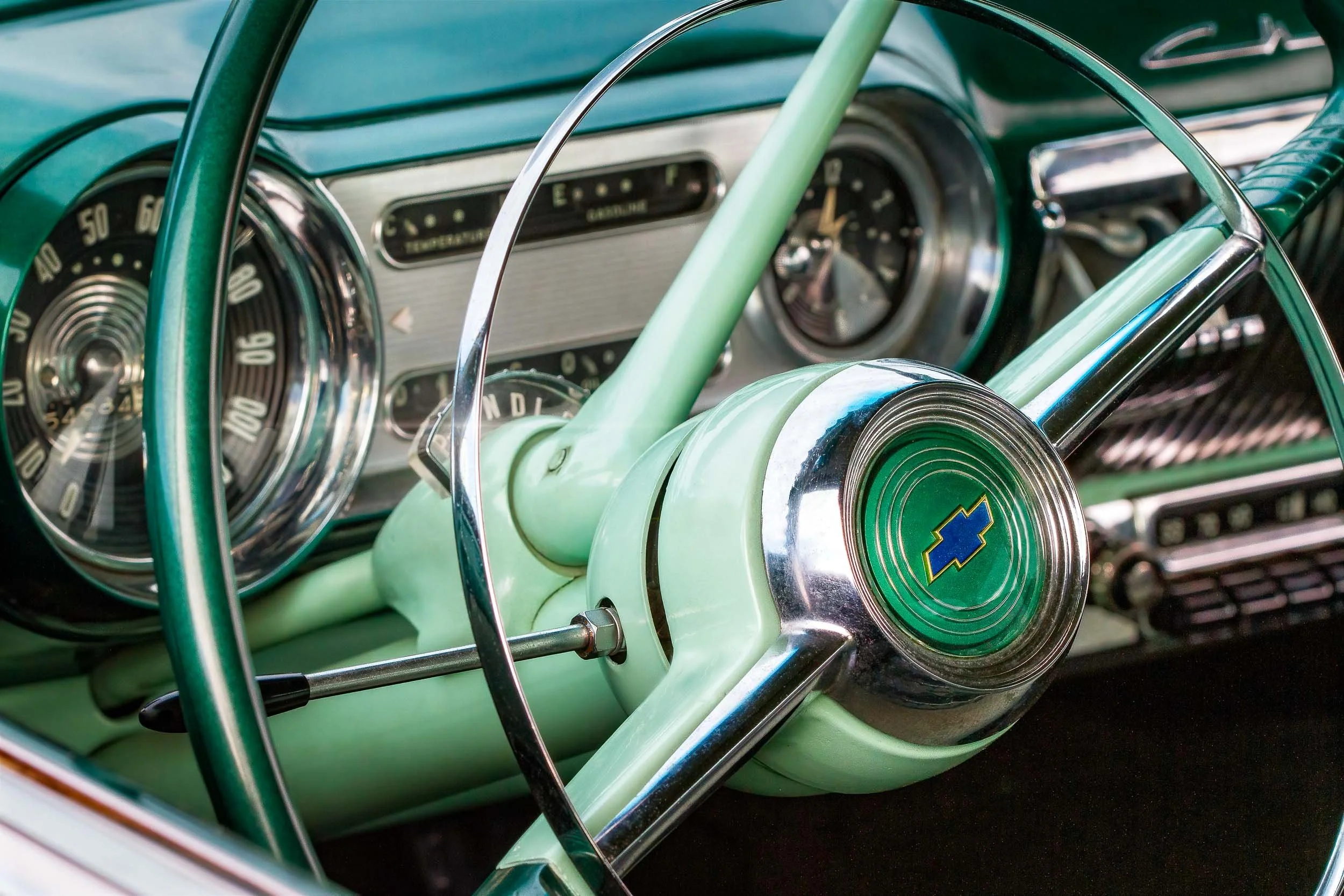
The Significance of Color
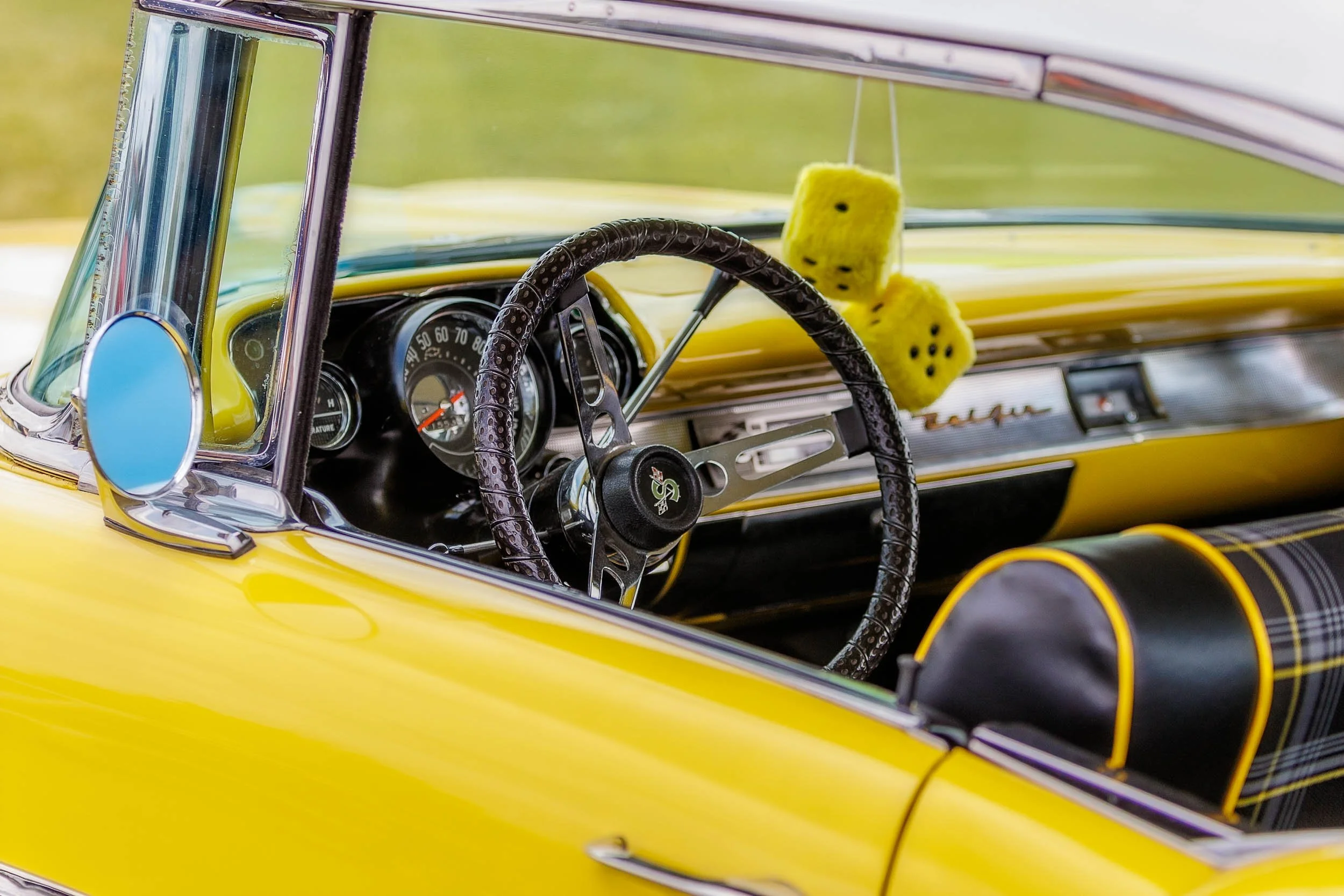
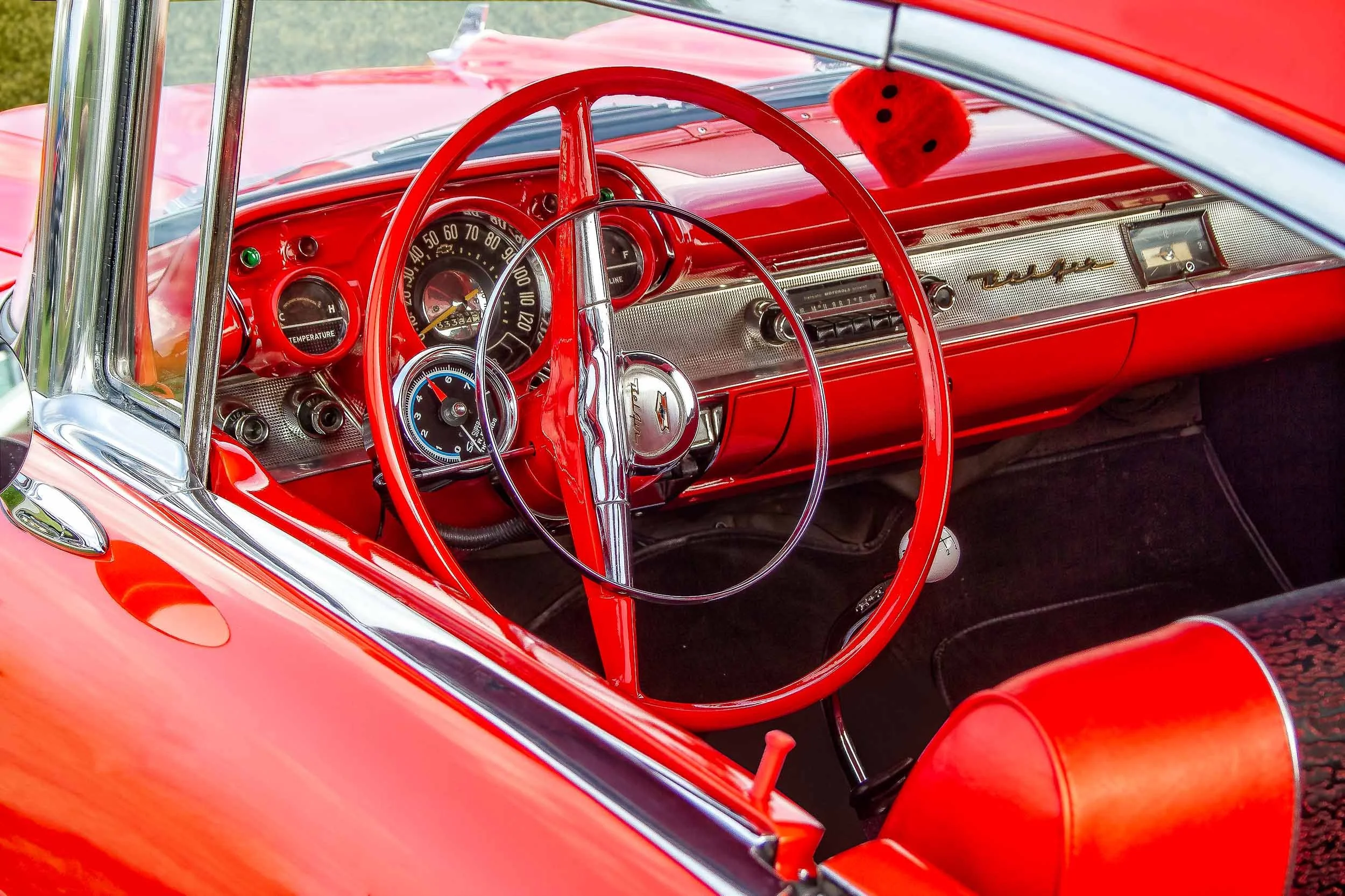
Classic cars are often remembered for their colors just as much as their shapes. Deep reds, pastel blues, seafoam greens, and bright chrome accents all reflect the design language of their era.
Photographing through the driver’s side window allows those colors to frame the image in subtle, and sometimes not so subtle, ways. The painted door, the curve of the window frame, or even a reflection in the glass can introduce color that surrounds the steering wheel and dashboard.
The paint becomes part of the composition. It guides the viewer’s eye into the interior of the car while still reminding us of the bold colors that made these vehicles stand out in the first place.
Editing for Timelessness
Classic cars don’t need trendy color grades or heavy contrast. I aim for:
Accurate, rich color
Controlled highlights on chrome
Subtle contrast
Clean distractions
I start my edits in Lightroom with a focus on preserving texture — especially in paint, leather, and metal. As many of these images are taken at classic car shows, I occasionally need to remove reflections of the patrons and the suite of tools available in Photoshop works particularly well for that task. The goal is not to modernize the image, but to respect the era the car came from.
Select images from this series are available as fine art prints.